NIS2 security awareness training: what to arrange in 2026
CyberPulse · Last updated: 15 November 2026
At a glance
NIS2 calls for cyber hygiene and cybersecurity training. In the Netherlands this is implemented through the Cbw. Base training on your risks, include new starters and record what people have learned.
For organisations within the Dutch Cybersecurity Act’s scope, the duty of care has applied since 15 August 2026. Buying a course is a start; you also need to explain why the approach fits and how you deliver it.
What does NIS2 require for staff training?
Article 21(2)(g) of NIS2 includes cyber hygiene and cybersecurity training within risk management. The Dutch Cbw implements the obligations nationally. Scope depends on sector, size and exceptions: check the Dutch Cbw guide. Other EU countries implement NIS2 through their own legislation.
There is no universal subject list or fixed training frequency for all employees. Your programme should fit your organisation’s risks, systems and activities. Management body members have a separate training track.
Which behaviours should people practise?
A practical foundation includes:
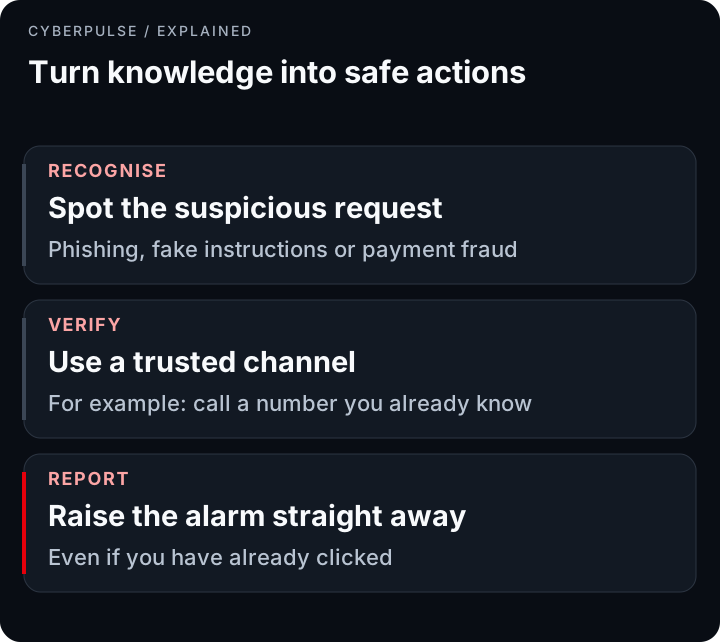
- Phishing and social engineering: recognising and checking suspicious emails, calls and payment requests.
- Passwords and MFA: using unique passwords and rejecting unexpected sign-in prompts.
- Incident reporting: knowing where to report, including after your own mistake.
- Secure working: locking devices, using approved channels and sharing information carefully.
Include newer attack patterns. ClickFix, for example, asks people to run a command outside their browser. The safe response is to stop and report.
These are practical topics, not a statutory checklist. Add depth for each role: payment fraud for finance, fake applications for HR and secure administration for IT.
How often should employees train?
NIS2 does not set a general number such as monthly or annually. Record your choice based on risks, staff changes and previous training results.
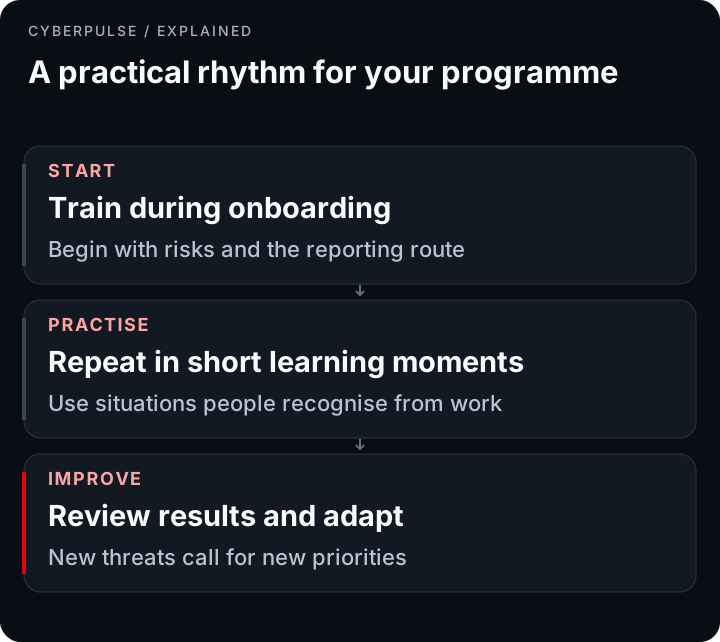
A regular rhythm helps cover new starters and role changes. An annual course can form part of your approach, but does not automatically address people joining or new risks arising between courses. Plan for those too.
How do you demonstrate that training works?
Record topic, date, completion and outcome for each person. Link those records to your training plan: which risks were you addressing and which groups needed to participate?
A quiz helps assess understanding. An exercise or phishing simulation can show how people act. Include reporting and follow-up in your evaluation; a click rate alone says little about overall resilience.
Use the findings to improve. If staff struggle with payment requests, arrange focused practice and review the payment procedure itself. Training does not replace technical security or sound processes.
How to set up the programme
- Map risks and audiences. Include relevant contractors.
- Write behavioural objectives. For example: verify bank-detail changes using a known phone number.
- Connect training to onboarding. Let new colleagues start promptly.
- Plan repetition and practice. Explain the frequency in your training plan.
- Record and improve. Follow up gaps and discuss results with management.
CyberPulse supports short weekly lessons, quizzes, phishing simulations and individual records. Weekly training is our practical delivery model, not a legal frequency. Find a partner or see which other frameworks require training.
Frequently asked questions
Is security awareness training mandatory under NIS2?
For organisations within scope, cybersecurity training forms part of the duty of care. In the Netherlands, the national obligations have applied through the Cbw since 15 August 2026.
Which organisations does the NIS2 training obligation apply to?
Assess sector, size, linked enterprises and exceptions using the NCSC scope check. Headcount or turnover alone is not a complete scope assessment.
How often do employees have to train under NIS2?
There is no universal statutory frequency for all staff. Justify your rhythm through risks and results, and account for starters and relevant changes.
Which topics must NIS2 training cover?
The law does not provide a universal curriculum. Phishing, passwords and MFA, reporting and secure working are practical foundations; add depth for role-specific risks.
What fines do I risk if I do not train?
The duty of care is subject to enforcement. Sanctions depend on the infringement, classification and circumstances. Missing training does not automatically result in the maximum fine.
Does the training obligation apply to the management body as well?
Executive management body members have an additional training duty with certification. NCTV guidance excludes non-executive directors and supervisory board members from that specific duty.
Sources
- Dutch government, Dutch Cybersecurity Act in force from 15 August 2026
- EUR-Lex, NIS2 Directive (EU) 2022/2555
- NCSC, duty of care under the Dutch Cybersecurity Act
- RDI, Dutch Cybersecurity Act
- NCTV, management accountability and training obligations
- NCSC, scope of the Dutch Cybersecurity Act
You get CyberPulse through a partner: find a partner · MSP or IT partner? See the partner programme